Introduction: Why Accuracy Matters

In clinical biomechanics, measurement accuracy directly impacts diagnostic and treatment decisions. A motion capture system that cannot reliably distinguish between normal and pathological movement patterns has limited clinical utility. The industry-standard metric for quantifying accuracy in motion capture is Root Mean Square Error (RMSE) — the statistical measure of how far estimated values deviate from the ground truth.

Understanding RMSE in Motion Capture

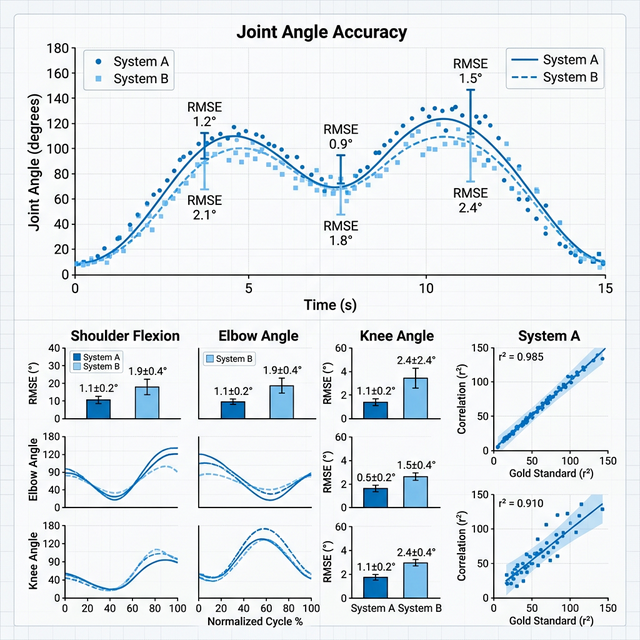
RMSE is calculated as the square root of the average squared differences between estimated and reference joint angles across all time frames. For clinical applications, the widely accepted accuracy threshold is RMSE ≤ 5° for most joints, with ≤ 2° considered excellent. RMSE values must be interpreted in context: a 3° error in hip flexion (large range of motion) has different clinical significance than 3° in subtalar inversion (small range of motion).

HoloMotion's Validation Methodology

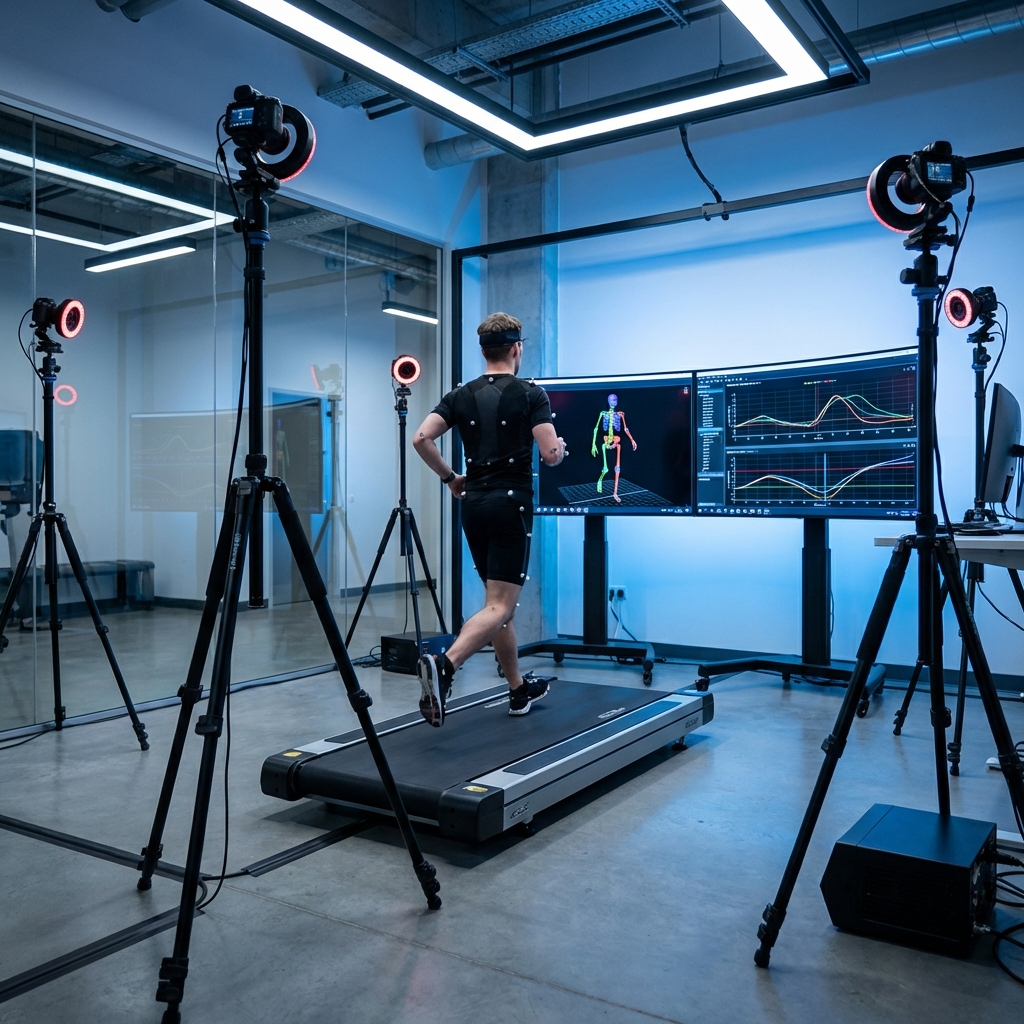
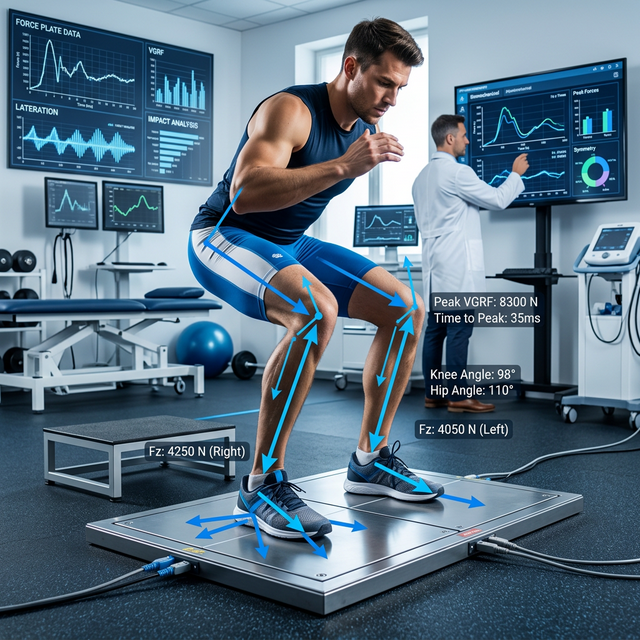
HoloMotion's accuracy was validated against the Vicon optical motion capture system (considered the gold standard) in a controlled laboratory study. Twenty healthy adults performed standardized movement protocols including gait, squats, and functional movements. Both systems captured simultaneously, and joint angles were computed using identical biomechanical models.

Results: Clinical-Grade Precision

HoloMotion achieved the following RMSE values compared to Vicon:

Sagittal plane (flexion/extension): Hip 2.1° | Knee 2.3° | Ankle 2.8°

Frontal plane (abduction/adduction): Hip 1.8° | Knee 2.5° | Trunk 1.9°

Correlation coefficients (r²) exceeded 0.95 for all major joints in the sagittal plane, indicating excellent agreement between systems.

Bland-Altman Analysis

Bland-Altman plots revealed minimal systematic bias (mean difference < 1° for most joints) with 95% limits of agreement within clinically acceptable ranges. No proportional bias was detected, confirming that accuracy is maintained across the full range of motion.

Clinical Significance

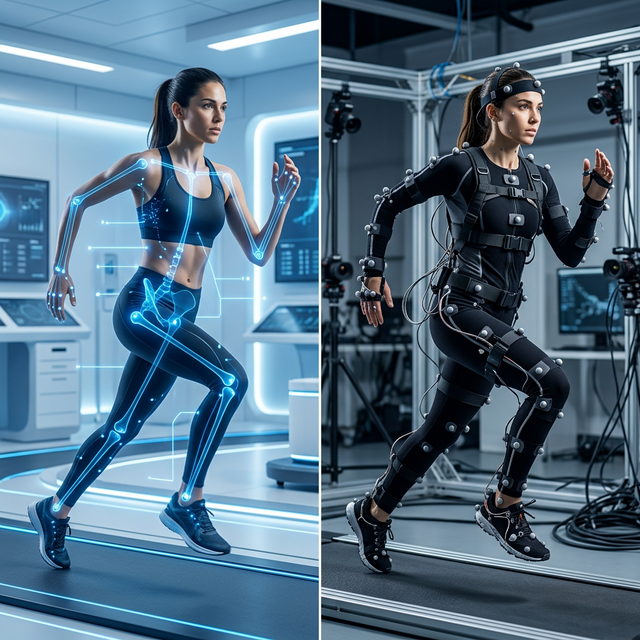
These results demonstrate that HoloMotion's markerless system meets the accuracy requirements for clinical gait analysis, joint range of motion assessment, postural evaluation, and functional movement screening. The system achieves this while requiring only a single RGB-D camera, no body-worn markers, and 60 seconds of capture time — making clinical-grade biomechanical assessment accessible outside specialized laboratories for the first time.